Does Halloween candy really cause cavities?
Candy itself isn't the whole problem — it's how often and how long sugar stays on the teeth. Each time a child eats sugar, mouth bacteria produce acid that attacks enamel for roughly 20 to 30 minutes. Enjoying treats with a meal, choosing candy that melts away quickly and brushing with fluoride toothpaste keeps that acid exposure short.
Across Richardson neighborhoods, kids will come home on October 31 with pillowcases full of treats. Taking the candy away rarely works, and it can make sweets feel even more exciting. A better plan is to set a few house rules that protect teeth while still letting kids enjoy the holiday.
As a family dentist in Richardson, we see the effects of the holiday season in the weeks that follow — usually not from one big night of candy, but from weeks of grazing on leftovers. The habits below are the ones that make the biggest difference.
Best and worst Halloween treats for teeth
Not all candy is equal. Here is how common treats compare, from a tooth's point of view:
Better choices
Plain chocolate melts and rinses away faster than most candy. Dark chocolate has less sugar, and sugar-free gum with xylitol can actually help by boosting saliva.
Use caution
Sour candy and sour gummies combine sugar with acid, which softens enamel. If your child loves them, pair them with water and wait about 30 minutes before brushing.
Hardest on teeth
Caramels, taffy and gummies stick in the grooves of back teeth for hours. Hard candy and lollipops bathe teeth in sugar for a long time and can crack teeth if bitten.
Seven simple habits to protect kids' teeth this Halloween
- Eat candy with meals. Saliva flow is higher during meals, which helps rinse away sugar and neutralize acid. A few pieces after dinner beats a piece every hour.
- Set a candy time, not a candy limit. One short treat window each day is better for teeth than grazing on the stash all afternoon.
- Drink water afterward. A glass of water helps wash sugar off the teeth, and fluoridated tap water adds a little extra enamel protection.
- Brush twice a day with fluoride toothpaste. Use a rice-grain smear for children under 3 and a pea-sized amount for ages 3 to 6, and help young children brush until they can do it well on their own.
- Don't forget to floss. Sticky candy hides between teeth, where a toothbrush can't reach.
- Trade in the extras. Many families let kids pick their favorites and trade the rest for a small toy, a book or an outing.
- Skip candy at bedtime. Saliva slows down during sleep, so sugar left on teeth overnight does the most damage.
How dental sealants and checkups help
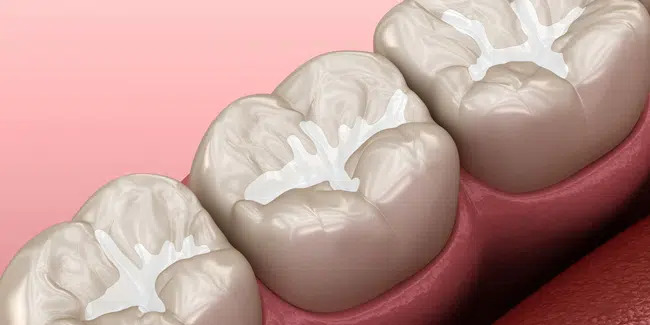
The chewing surfaces of back teeth have deep grooves where sticky candy and plaque get trapped. Dental sealants are a thin, protective coating painted onto those grooves. The CDC reports that sealants prevent about 80% of cavities in back teeth for the first two years after they are placed, and they keep protecting for years after that.
Sealants are quick and painless — no numbing or drilling — and many dental plans cover them for children. A fall or winter cleaning is a good time to check whether your child's molars would benefit. Regular dental cleanings also remove plaque before it can turn into decay, and fluoride treatments help strengthen enamel.
Making dental visits fun for Richardson kids
At Gentle Touch Dentistry, we love seeing kids and keeping their visits relaxed and positive. Our kid friendly dentistry starts with a gentle, unhurried approach, simple explanations and plenty of encouragement — so children learn that the dentist is a friendly place, not a scary one.
If you are looking for a "dentist near me" who can see the whole family, we make it easy to book siblings and parents back to back. Our office on Alma Rd is a short drive for families across Richardson, Plano and Garland, and Saturday appointments are available by appointment.